Technology at the service of your skinTechnology at the service of your skin
Dermatological lasers and light-based devices in Barcelona
One of my main areas of expertise is treating the skin with lasers and light-based devices. My experience with different dermatological devices lets me select and combine the most suitable technologies according to the diagnosis, the characteristics of each person’s skin and the goals of treatment.
Technology isn’t a standalone treatment, and it doesn’t replace medical judgment. As part of a personalized plan, it can complement skincare and dermatological treatment to address dark spots, redness, scars, texture changes, signs of photoaging and certain skin lesions. The goal is to achieve effective, safe and gradual results, while always keeping the skin looking natural.
IPL (intense pulsed light) in Barcelona
Intense pulsed light, or IPL, isn’t a laser but a light source that emits different wavelengths and can selectively target melanin and hemoglobin. This versatility makes it possible to treat pigment and vascular concerns on a single platform, such as solar lentigines, redness, visible blood vessels and the vascular component of rosacea. In selected patients, it can also be used as a complementary treatment to improve certain inflammatory acne lesions.
I work with Candela’s Nordlys® platform and its PR 530 and VL 555 handpieces. I usually use the PR 530 on lighter skin phototypes and adapt the use of the VL 555 to higher phototypes and certain vascular lesions, always after assessing skin color, degree of tan, lesion depth and the risk of pigmentation. In addition to treating specific dark spots and redness, IPL allows a comprehensive approach to facial photoaging. Clinical and histological studies have shown improvements in uneven pigmentation, erythema and overall skin quality, along with changes consistent with dermal remodeling and new collagen formation.
It can also be used on healthy skin when the goal is to gradually improve evenness, radiance and overall skin quality. Although it’s a non-invasive procedure that is generally well tolerated, its safety depends on proper indication and on choosing the handpiece, settings and timing of treatment for each individual. That’s why, before every session, I carry out a dermatological assessment and adapt the procedure to the characteristics and needs of each person’s skin.
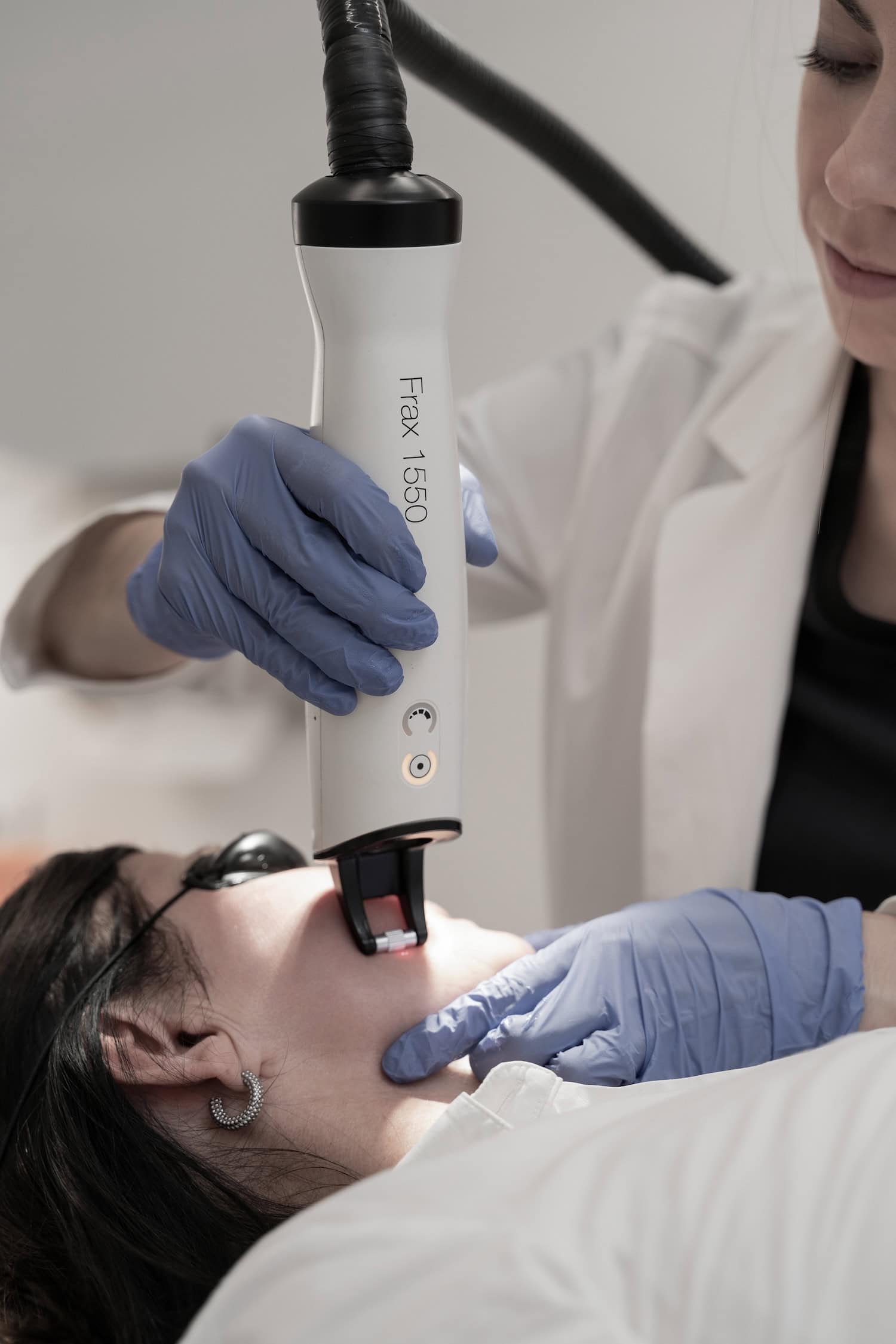
Non-ablative fractional laser: Frax 1550 and 1940 in Barcelona
The Nordlys® Frax 1550 and Frax 1940 lasers work by creating microscopic columns of treatment without removing the skin’s surface. The Frax 1550 reaches deeper layers and promotes dermal remodeling and new collagen formation, so it can improve texture, fine lines and certain scars, especially atrophic acne scars. The Frax 1940 works more superficially and is particularly useful for improving uneven pigmentation, sun damage and texture. Both can also be used on healthy skin when the goal is to make the skin gradually more even, smooth and radiant.
Because they’re fractional and non-ablative, recovery is faster and they have a good safety profile, even in higher skin phototypes, as long as the indication, energy and density are carefully adapted to each person’s skin. Depending on the diagnosis and goals, they can be combined or sequenced with intense pulsed light to treat dark spots and redness at the same time, or with a CO₂ laser when a more intensive approach is needed for scars, wrinkles or marked texture changes. The choice between the 1550, the 1940 or a combination of technologies is always made on an individual basis.
DEKA CO₂ laser in Barcelona
The CO₂ laser can work at different depths and intensities depending on each person’s skin. In its most superficial mode, CoolPeel® delivers energy in very short pulses that limit the spread of heat to the surrounding tissue. This treatment can gradually improve radiance, texture, the apparent size of pores and fine lines, with a shorter recovery than conventional resurfacing. Its intensity can be adjusted at each session and, in selected patients, it makes it possible to treat higher skin phototypes or carry out procedures during times of greater sun exposure, as long as the skin isn’t tanned and strict sun protection is maintained.
When we’re looking for deeper renewal, the laser can be used for full-face resurfacing or to treat areas particularly affected by photoaging, such as the eye or mouth area. The laser removes small columns of tissue in a controlled way and produces a thermal effect that contracts existing collagen and stimulates the formation and remodeling of new collagen. Because it can improve wrinkles, texture, skin quality and a certain degree of laxity at the same time, ablative CO₂ resurfacing is still considered one of the gold-standard treatments for facial photoaging.
Intensive treatments require preparing the skin in the weeks beforehand and planning a recovery period. After deep resurfacing, 7 to 10 days of home care are usually needed, followed by redness that can last anywhere from several weeks to a few months and, once the skin’s surface has healed, can be covered with makeup. Results appear gradually and continue to develop over the following months. After an accurate dermatological diagnosis, the CO₂ laser can also remove lesions such as seborrheic keratoses, skin tags, certain nevi (moles), syringomas, xanthelasmas and some angiomas, as well as treat warts and condylomas. If there is any diagnostic doubt or suspicion of malignancy, a technique that allows the lesion to be analyzed through histological examination should be prioritized.