Scars
Surgical scars
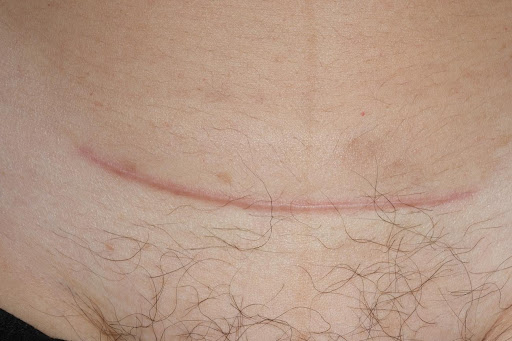
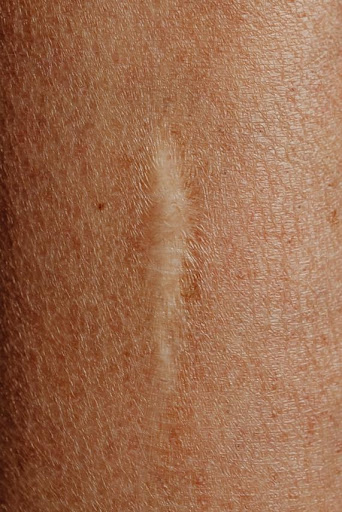
The appearance of surgical scars varies depending on factors such as location, size and patient characteristics. The patient’s home care is also important, especially during the first 6 months, such as silicone gels or patches, and sun protection to prevent pigmentation.
Frequently asked questions
Click on the question to expand the answer
In most cases, treatment can be started after suture removal, especially in areas where a good aesthetic result is important, such as the face. Once an unsightly scar has developed or if we wish to improve its appearance, we will start treatment as soon as possible.
Scars on certain parts of the body, such as the abdomen, trunk or neck (after caesarean section or heart or thyroid surgery) have a non-negligible risk of developing into hypertrophic scars or even keloids. These anatomical areas are subjected to significant tensile forces, so the risk of developing abnormal scars is high.
In the management of these scars we can use lasers (vascular, fractionated ablative and non-ablative), infiltration of corticosteroids and cytostatics, contact cryotherapy and maintenance with silicone patches.
Surgical scars can improve by 30% to 70%. This variability is related to the patient’s own ability to produce collagen.
Usually between 5 and 8 sessions are necessary, although the number may vary depending on the characteristics of the scar itself.
Book an appointment
You can make an appointment by phone, via email, or by filling in this form.
