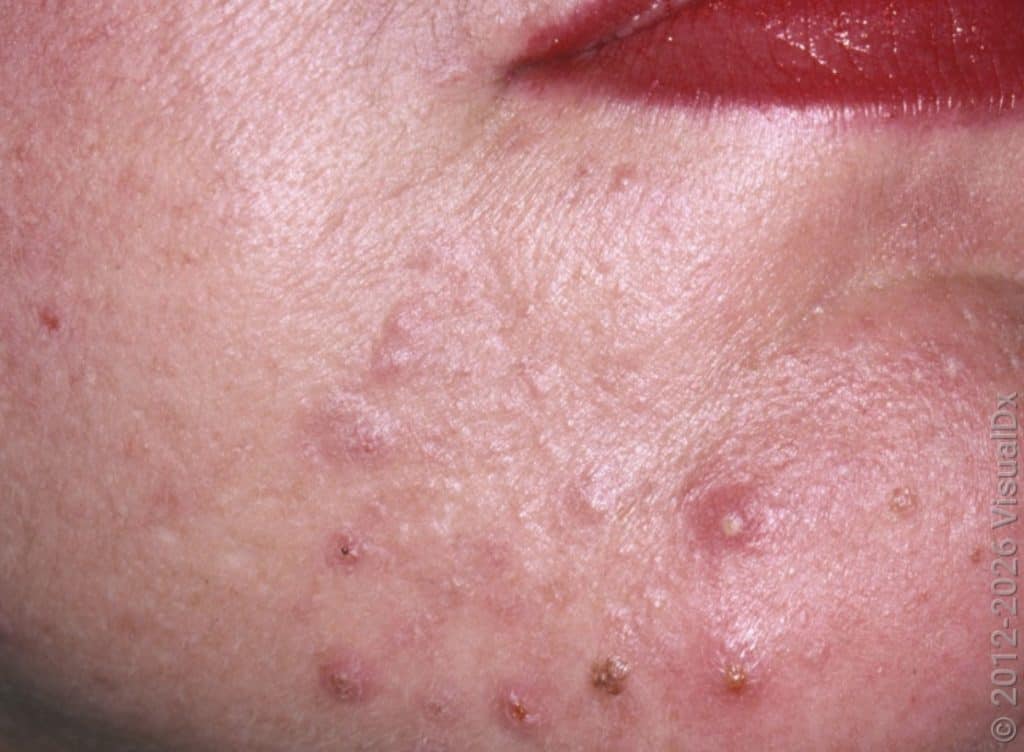
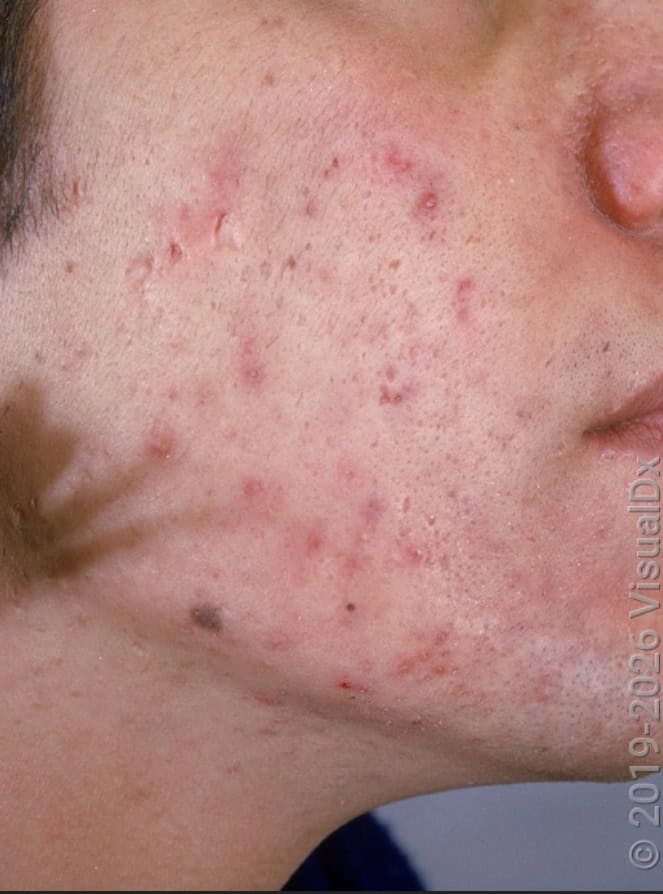
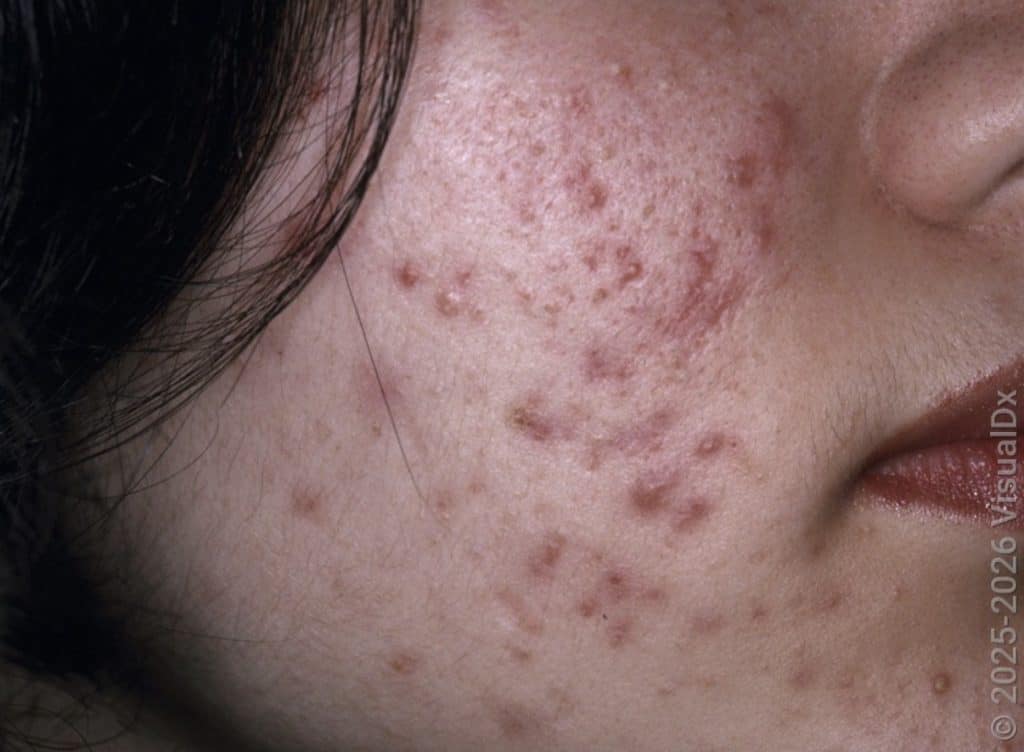
Adult female acne is acne that affects women over the age of 25. Its prevalence varies widely between studies, with figures ranging from 12% to 54%. It may persist from adolescence (the most common situation), appear for the first time in adulthood, or come back after a period without breakouts.
Its causes are complex and involve several factors: the influence of androgens and the skin’s sensitivity to these hormones, changes in the skin barrier, inflammation, and shifts in the balance of the microbiota, particularly involving Cutibacterium acnes. The classic pattern includes inflammatory lesions, such as papules and pustules, on the lower third of the face, especially along the jawline and chin, although it can also affect other areas and come with comedones. Beyond the visible lesions, it can have a significant impact on emotional well-being, with anxiety, stress or depressive symptoms that don’t always match how severe the acne is.
Treatment calls for a personalized approach and, often, long-term follow-up. However, we now have a range of tools that let us control breakouts in most cases and support our patients through the different stages of their lives. For a long time, adult acne didn’t get the attention it deserved. My own experience is part of the reason I became a dermatologist: for more than ten years, I didn’t have an effective treatment or anyone who really listened to me. That’s why, in my practice, I put special emphasis both on controlling breakouts and on listening to and understanding how each patient experiences them.
As with any skin condition, the first step is a proper diagnosis. The medical history and physical examination are usually enough to guide treatment. In some patients, especially if there are menstrual irregularities or other signs of androgen excess, hormone testing may be needed, along with a joint assessment with gynecology or endocrinology. Possible associated causes include polyendocrine metabolic ovarian syndrome (PMOS), formerly known as polycystic ovary syndrome (PCOS).
In many cases, oral treatment is needed: combined contraceptives (when appropriate), spironolactone or isotretinoin. The choice depends on the type of acne, how it has progressed, previous treatments and each woman’s circumstances. The aim is to control inflammatory lesions, reduce the risk of scarring and improve the patient’s well-being. We also tailor treatment to other features that may be present at the same time, such as oily skin, sensitivity or melasma.
In addition, and always based on a dermatological assessment, we have several topical retinoids available, such as adapalene, tazarotene, tretinoin and trifarotene. These treatments help control acne and, in some cases, have been shown to reduce scarring. Some can also improve other aspects of the skin, which is especially useful when fine lines, pigmentation changes or visible pores appear alongside acne. The choice of retinoid and how it’s used should be tailored to each patient’s tolerance and needs.
Beyond preventing new breakouts, in selected cases we can add lasers and light-based devices to the treatment, targeting certain inflammatory lesions or the red marks they leave behind. To improve scarring, we have ablative and non-ablative lasers that can also improve skin texture and quality, as changes in these start to become noticeable at this age (fine lines, enlarged pores, melasma, solar lentigines…).
Traditionally, marks and scars were treated only once the acne was under control. Today, in some patients, we can start treating them earlier, coordinated with the treatment of active breakouts. The timing and technique should be tailored to the type of lesion, the skin, and the treatment the patient is currently receiving.
Your skincare routine is another key pillar. We recommend gentle, effective cleansing. Double cleansing at night can help if you wear makeup or a water-resistant sunscreen, as long as your skin tolerates it well. Chemical exfoliants, such as some hydroxy acids, can have a role in certain skin types, as can scrubs or physical exfoliants. We round out the routine with moisturizers suited to your skin, ingredients such as azelaic acid or niacinamide when appropriate, and above all, broad-spectrum sun protection. Tinted sunscreens with iron oxides can be especially useful when there’s melasma or a tendency toward hyperpigmentation.
At my practice in Barcelona, I often treat adult female acne and, when needed, recommend coordinated care with other specialists (nutritionists, gynecologists, endocrinologists, personal trainers). We also look at factors such as stress, sleep, diet and lifestyle habits, which can affect how acne develops. If your acne persists or comes back, a dermatological assessment can help you understand what’s going on and find a plan tailored to your skin, with follow-up and realistic goals.